
Spatial Reasoning — thinking in shapes, angles, and rotations
Spatial reasoning is the ability to think about objects in two and three dimensions and to draw conclusions about them from limited information. A spatial reasoning question asks you to mentally rotate, fold, or reassemble a figure — to know what an object would look like from another angle or in another configuration without ever seeing it. It is distinct from pattern recognition: less about spotting rules, more about manipulating shapes in your head. LEVO measures spatial reasoning as a scored section in both of its full-length IQ tests, trains it in daily sessions, and several LEVO brain games practice the same skill.


What it is
Spatial reasoning is the mind's 3D workshop. The core operations are mental rotation (what does this look like turned ninety degrees?), spatial visualization (what does this flat net become when folded?), and geometric reasoning (which pieces can assemble into that whole?). What makes it a reasoning skill rather than a perception skill is the "limited information" part: the question never shows you the answer state, so you must construct it mentally and check candidates against it.
That construct-and-verify loop is demanding — it loads working memory while you hold the transformed object in mind — which is why spatial questions feel effortful in a way simple visual questions do not. LEVO scores spatial reasoning on its own axis of the skill radar, separately from matrix reasoning and pattern recognition, so your report distinguishes shape manipulation from rule finding.
How LEVO measures it
- IQ Test 1 — 8 spatial reasoning questions.
- Post-training IQ test — 8 questions, separate question set.
- Tests 3–5 do not include this category (matrix-only).
How LEVO trains it
One of the seven daily training categories: 6 spatial questions per daily session from a practice pool of 94 exercises, feedback after each answer, same question types as the tests. Practice improves the practiced skill — rotating and reassembling shapes faster and more accurately — and the retest shows the change.
Related brain games
A whole Spatial category plus several others list spatial reasoning among the skills they help improve:


Architect
Helps improve spatial reasoning · planning · problem solving.
Spatial

Origami
Helps improve spatial reasoning · visual recognition · problem solving.
Spatial

Traffic Jam
Helps improve planning · spatial reasoning · problem solving.
Spatial
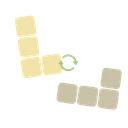
Rotation
Helps improve spatial reasoning · visual recognition · brain processing speed.
Spatial
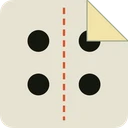
Folding
Helps improve spatial reasoning · working memory · visual recognition.
Spatial

Blueprint
Helps improve spatial reasoning · quantitative reasoning · visual recognition.
Spatial

Mirror
Helps improve spatial reasoning · visual recognition · precision.
Spatial

Building Blocks
Helps improve spatial reasoning · problem solving · decision making.
Popular

Snake Trap
Helps improve spatial reasoning · mental arithmetic · decision making.
Popular
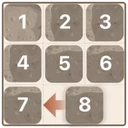
Sliding Numbers
Helps improve planning · spatial reasoning · decision making.
Popular
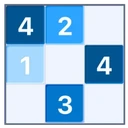
OkuDoku
Helps improve spatial reasoning · mental arithmetic · decision making.
PopularQuestions & answers
What is spatial reasoning?
Spatial reasoning is the ability to mentally manipulate objects in two and three dimensions — rotating, folding, or assembling them in your head — and to reason about the result without seeing it. It is measured in LEVO's two full-length IQ tests and trained daily as one of the seven training categories.
What kinds of questions test spatial reasoning?
Typical items ask which option shows the same object rotated, what a flat shape becomes when folded, or which pieces combine into a given figure. In each case you are given partial information and must construct the rest mentally.
Which LEVO games train spatial reasoning?
LEVO's entire Spatial category — Architect, Origami, Traffic Jam, Rotation, Folding, Blueprint, and Mirror — is built around it, and several games in other categories (Building Blocks, Snake Trap, Sliding Numbers, and OkuDoku) list spatial reasoning among their benefits too. They complement — but don't replace — the daily spatial questions in the IQ training program, which use the same format the tests score.











Measure your spatial reasoning.
Take the baseline test, train it daily, and retest to see what changed for you.
Start with the test