
Origami — rebuild the paper figure, piece by piece
Origami is a paper-folding spatial puzzle in LEVO's Spatial games category — and it is a different game from Origami Match, LEVO's memory card game that happens to share the name. In Origami, each figure appears as a dashed paper silhouette with its cut pieces scattered in a tray below. You drag every piece onto its home spot in the figure, using the mountain-and-valley crease marks to tell similar pieces apart, until the whole shape — a crane, fox, koi, or one of fifty origami figures — is rebuilt and folds up. Origami helps improve spatial reasoning, visual recognition, and problem solving, on a complexity-based ladder of 50 adaptive levels.

How to play
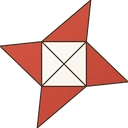
Each round shows one origami figure drawn as a dashed silhouette, with its cut paper pieces waiting in a tray beneath the board. Drag a piece up onto the figure: when its outline lands close to its own home spot, it snaps into place and locks in. A piece only fits its own home, and the crease ticks are how you tell same-shaped pieces apart — solid vermilion marks fold up (mountain), dashed gold marks fold down (valley), so matching the creases is matching the piece. Drop a piece somewhere on the figure that isn't its home and it shakes and counts as a miss; drop it back toward the tray and nothing happens. Place every piece and the completed figure folds up in a short celebration, then the next one slides in. There's no grid and no lives — a round is simply a figure rebuilt.
What it helps improve
- Spatial reasoning — Every placement is a mental fit test: rotating and matching a paper facet against the figure gaps, strengthening how you visualize and manipulate objects in space.
- Visual recognition — Similar pieces are told apart by their crease pattern and outline, read at a glance — sharpening how quickly you identify visual patterns.
- Problem solving — Each figure is a small deduction — which piece belongs in which home, and how the creases line up — boosting analysis of challenges and finding solutions.
Levels & progression
Complexity-based: 50 levels, each a short run of figures (about five in the early levels, down to two in the hardest) played against a single per-level time budget. Difficulty adapts within the level — rebuild a figure cleanly and the next is cut into more, smaller pieces; a sloppy figure eases it back — while the baseline climbs across the 50 levels, so early figures arrive in a few large pieces and the hardest come cut into many. The pre-game screen shows the adaptive tier: Novice, Regular, Adept, Master, Expert. An interactive tutorial guides a hand through placing each piece before your first level.
Questions & answers
Is Origami the same as Origami Match?
No — they are two different LEVO games that share only the origami theme. Origami (this game) is a Spatial puzzle: you drag paper pieces onto a dashed figure and match its creases to rebuild it. Origami Match is a Memory game where origami symbols flash, flip face-down, and you find the matching pairs. Different category, different mechanic.
Is Origami timed?
Yes. Each level gives you one time budget covering its whole run of figures; if it runs out before you finish the last figure, the level ends and you can retry it. There are no lives — the pressure is the clock plus getting each piece to its right home.
How does a piece snap into place in Origami?
Drag a piece onto the dashed silhouette; it locks in only when dropped near its own home spot. The crease marks — solid vermilion folds up, dashed gold folds down — distinguish similar-looking pieces, so reading the creases is how you place each one correctly. A miss on the figure shakes and resets; a drop back at the tray costs nothing.








Five minutes. One game.
Origami is one of 32 brain games in LEVO — measure with an IQ test, then train daily.
Start training