
Numeric Reasoning — the logic hidden inside number sequences
Numeric reasoning is the ability to find the rule behind a sequence of numbers and supply the value that logically continues it. A numeric reasoning question presents a finite series arranged by a hidden pattern — arithmetic steps, ratios, alternations — and asks for the missing number. Arithmetic fluency helps, but the skill being measured is inductive reasoning applied to quantities: detecting structure in numbers rather than computing for its own sake. LEVO measures numeric reasoning as a scored section in both of its full-length IQ tests and trains it with a dedicated category in your daily training sessions.


What it is
A number sequence is a pattern recognition problem wearing numeric clothes. The rule might live in the differences between terms, in their ratios, in an alternation between two interleaved sequences, or in a relationship that references position — and the solver's job is hypothesis testing: propose a rule, check it against every given term, discard it at the first miss. Calculation is the tool, not the skill; the questions keep the arithmetic small precisely so that detecting the structure, not computing it, decides your score.
This is inductive reasoning in its most measurable form, which is why number sequences appear in nearly every established test battery. In your LEVO report, numeric reasoning has its own axis, separate from the visual rule-finding sections — some people who read visual patterns fluently find numeric structure opaque, and vice versa. The radar makes that asymmetry visible.
How LEVO measures it
- IQ Test 1 — 8 numeric reasoning questions.
- Post-training IQ test — 8 questions, separate question set.
- Tests 3–5 do not include this category (matrix-only).
How LEVO trains it
One of the seven daily training categories: 6 numeric questions per daily session from a practice pool of 88 exercises, with feedback after every answer explaining the rule. Practice makes you faster at recognizing the common sequence families and more systematic at testing rules — the practiced skill, measured again at retest.
Related brain games
Four mental-math games list quantitative reasoning among their benefits — Magic Numbers is the closest match in gameplay:


Magic Numbers
Helps improve quantitative reasoning · focus · planning.
Focus
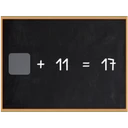
Missing Numbers
Helps improve quantitative reasoning · processing speed · estimation.
Mental Math
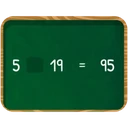
Forgotten Operators
Helps improve quantitative reasoning · processing speed · estimation.
Mental Math

Alien Percentages
Helps improve quantitative reasoning · estimation · processing speed.
Mental MathQuestions & answers
What is numeric reasoning?
Numeric reasoning is detecting the rule that generates a sequence of numbers and using it to supply a missing value. It is inductive logic applied to quantities. LEVO measures it as an 8-question section in both full-length IQ tests and trains it daily as one of seven categories.
Is numeric reasoning the same as being good at math?
No. The arithmetic in sequence questions is deliberately small; what is scored is whether you detect the structure — differences, ratios, alternations — not how fast you calculate. Strong calculators can miss structure, and strong pattern-spotters can be slow calculators.
How does LEVO train numeric reasoning?
Each daily session includes 6 number sequence questions from an 88-exercise pool, with the rule explained after each answer. Four mental-math games — Magic Numbers, Missing Numbers, Forgotten Operators, and Alien Percentages — add quantitative practice alongside.












Measure your numeric reasoning.
Take the baseline test, train it daily, and retest to see what changed for you.
Start with the test